- March 28, 2026
- Posted in Doors
uPVC vs Composite Doors: Which Front Door Is Best?
Composite doors offer superior security, insulation, and durability for UK front entrances, while uPVC doors provide budget-friendly alternatives meeting minimum standards for replacements and secondary doors.
Homeowners replacing front doors want security, energy efficiency, kerb appeal, and minimal maintenance without overspending or creating future problems. This guide compares uPVC and composite doors across construction, thermal performance, security standards, and cost to help you choose the right option.
Key Takeaways
- Composite doors offer stronger security, insulation, and durability, while uPVC provides adequate performance for standard needs at a lower cost.
- Both door types can meet UK regulations for thermal efficiency and security when properly specified and installed as a complete doorset.
- Composite costs more upfront but lasts longer, whereas uPVC is a budget-friendly choice suited to secondary doors or simpler replacements.
What is a uPVC Door
A uPVC door uses plastic-framed construction with steel reinforcement inside hollow chambers to provide structural strength.
When choosing a uPVC door, you can expect:
- An affordable alternative to traditional wooden doors
- No need for regular painting or treatment
- Standard security features like multi-point locks
- Compliance with basic thermal performance requirements
- Strong resistance to damp conditions
- Simple colour ranges and glazing styles
- More limited aesthetic flexibility
Budget-conscious homeowners and rental property landlords typically choose uPVC for secondary entrances and straightforward replacements.
What Is a Composite Door
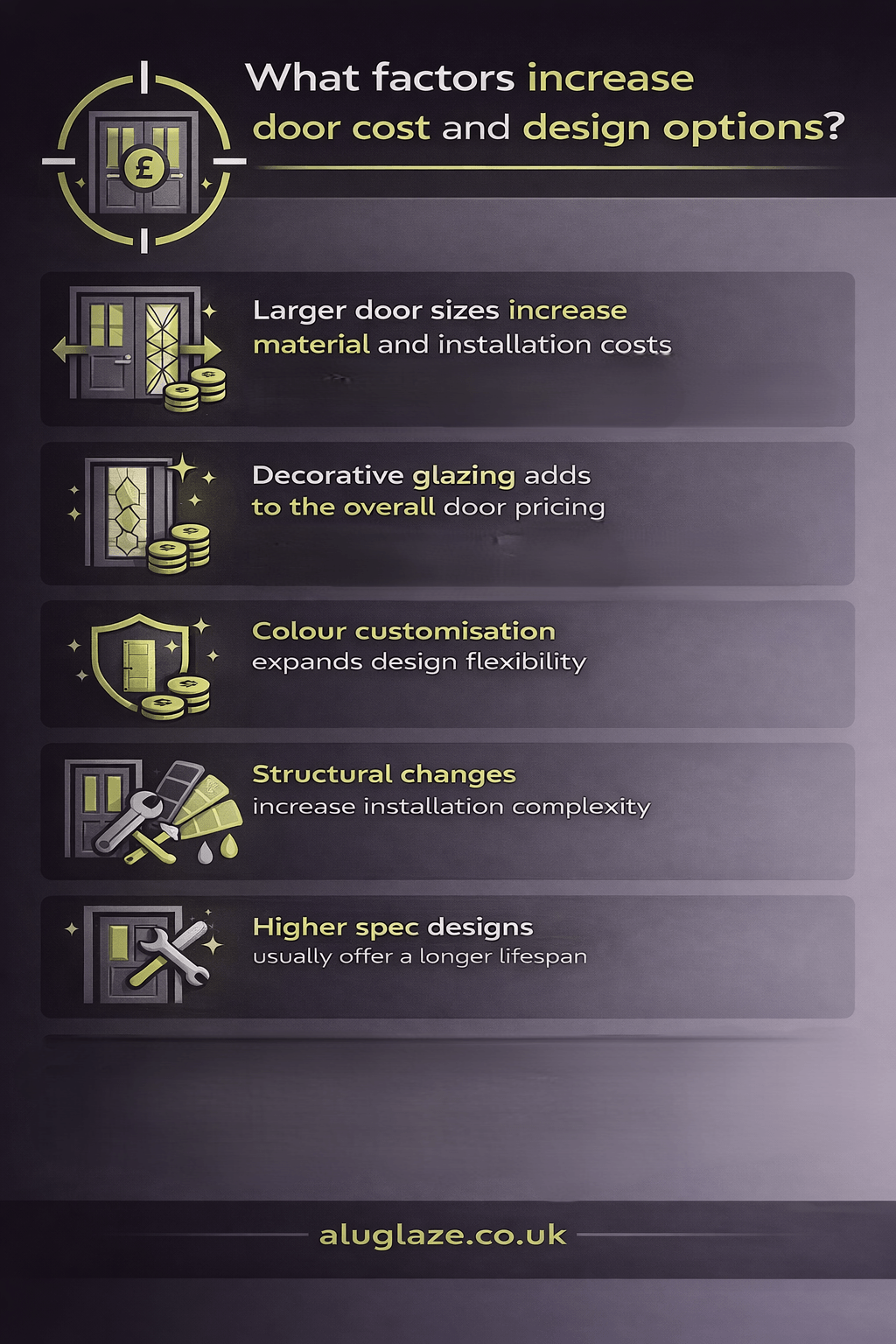
Composite doors combine multiple materials in layered construction with solid foam insulated cores surrounded by reinforced outer skins.
The solid core provides structural strength far exceeding hollow chamber designs used in uPVC alternatives.
External skins replicate timber grain and texture through modern manufacturing processes that create a premium appearance without timber maintenance requirements. Internal construction includes steel reinforcement bars, high-density foam insulation, and weather-resistant outer layers working together as integrated systems.
These doors target homeowners prioritising security, thermal performance, and kerb appeal for primary front entrances. Manufacturing flexibility allows extensive colour ranges, decorative glazing options, and authentic wood effect finishes that suit both modern and traditional properties.
How Modern Front Doors Are Constructed
Modern door construction uses layered systems where outer skins, internal cores, and frame assemblies combine to create complete doorsets performing as integrated units.
Outer skins provide weather protection and visual appearance, while internal cores determine strength, insulation, and sound-dampening characteristics.
Frame assemblies are designed to support overall door performance through:
- Thermal breaks that reduce heat transfer
- Weather seals that prevent draughts and water ingress
- Reinforcement points that improve structural strength
- Integration with the door leaf for full system performance
- Compliance with building regulation requirements
Manufacturing quality affects how layers bond together, whether cores remain stable over time, and if weather seals maintain compression across temperature changes. Complete doorset performance matters more than individual material properties because regulatory testing evaluates how doors resist forced entry, prevent heat loss, and exclude wind driven rain as assembled units rather than separate components.
Key Differences Between uPVC and Composite Door Materials
Material choices and internal construction create measurable performance differences affecting security, energy efficiency, durability, and visual appearance across typical 25 year service lives.
Here is how uPVC and composite door construction differs across critical performance characteristics:
| Characteristic | uPVC Doors | Composite Doors |
|---|---|---|
| Core construction | Hollow chambers with steel reinforcement | Solid foam core with steel bars |
| Door thickness | 44 to 54 millimetres typical | 44 to 70 millimetres available |
| Thermal performance | 1.4 to 1.8 W/m²K achievable | 1.0 to 1.4 W/m²K typical |
| Forced entry resistance | Meets standards with quality hardware | Superior leaf strength aids security |
| Design flexibility | Limited colours, basic woodgrain | Extensive colours, authentic timber effects |
| Typical cost range | £500 to £1,200 installed | £1,000 to £2,500 installed |
Hollow chamber construction in uPVC provides adequate strength for meeting building regulation minimums when properly specified and fitted. Solid core composite construction delivers inherently greater rigidity that complements multi point locking systems during forced entry attempts.
Which Door Is More Secure and Energy Efficient
Security and thermal performance drive UK front door regulations, with replacement door standards requiring 1.4 watts per square metre kelvin from 15 June 2023 in England alongside draught proofing and controlled fitting requirements.
Both door types achieve required thermal performance when specified correctly, though composite doors typically exceed minimums through solid foam cores providing continuous insulation.
uPVC doors meet standards through multi chamber frame designs and quality glazing units that prevent heat loss around edges.
Complete doorset security testing evaluates resistance to realistic opportunist burglary attempts rather than theoretical component strength, making installation quality and hardware specification as important as material choice.
Both door types use modern security features, including:
- Multi-point locking systems engaging at multiple points around the frame
- uPVC doors reinforced with steel inside hollow chambers
- Composite doors built with solid cores for added strength
- Reduced flex in composite doors under forced entry attempts
- Improved resistance to leverage tools like crowbars
Door leaf strength in composite construction resists kicking and shouldering attempts more effectively than hollow chamber alternatives. Police recorded 229,223 burglary offences in England and Wales in the year ending September 2025, with crime survey estimates around 342,000 domestic burglary incidents, making a compliant doorset specification essential rather than optional for UK homes.
Draught proofing quality affects both energy efficiency and comfort through compression seals around frame perimeters that prevent air infiltration.
Thermal bridging occurs where metal reinforcement or hardware creates heat loss paths through door assemblies, requiring careful specification in both materials. Complete doorset performance depends on frame installation, threshold sealing, and weather strip maintenance as much as leaf material properties.
Weather Resistance and Long Term Performance
UK conditions with high rainfalls including 1,162.68 millimetres of annual rainfall, 159.08 rainy days yearly, and 9.27 knots of mean wind speed create demanding environments for external doors.
Composite doors typically last 25 to 35 years, while uPVC doors offer around 20 to 30 years depending on quality. Composite resists moisture, fading, and warping better, while uPVC can fade or slightly distort over time under prolonged UV and temperature changes.
The following maintenance requirements and performance characteristics distinguish long-term ownership experiences between door types:
- Composite doors need occasional washing with mild detergent while maintaining colour and finish integrity across decades
- uPVC doors require regular cleaning to prevent dirt accumulation in textured surfaces and around weather seals
- Both door types benefit from annual hardware lubrication and hinge adjustment to maintain smooth operation
- Weather seal replacement becomes necessary every 10 to 15 years regardless of material choice
- Composite doors resist impact damage better than uPVC when struck by garden furniture or windblown debris
Fade resistance and cleaning simplicity affect visual appearance over ownership periods, with composite finishes maintaining original appearance better than uPVC alternatives. Long term reliability depends on installation quality, exposure levels, and maintenance consistency as much as material selection.
Cost by Design and Finish
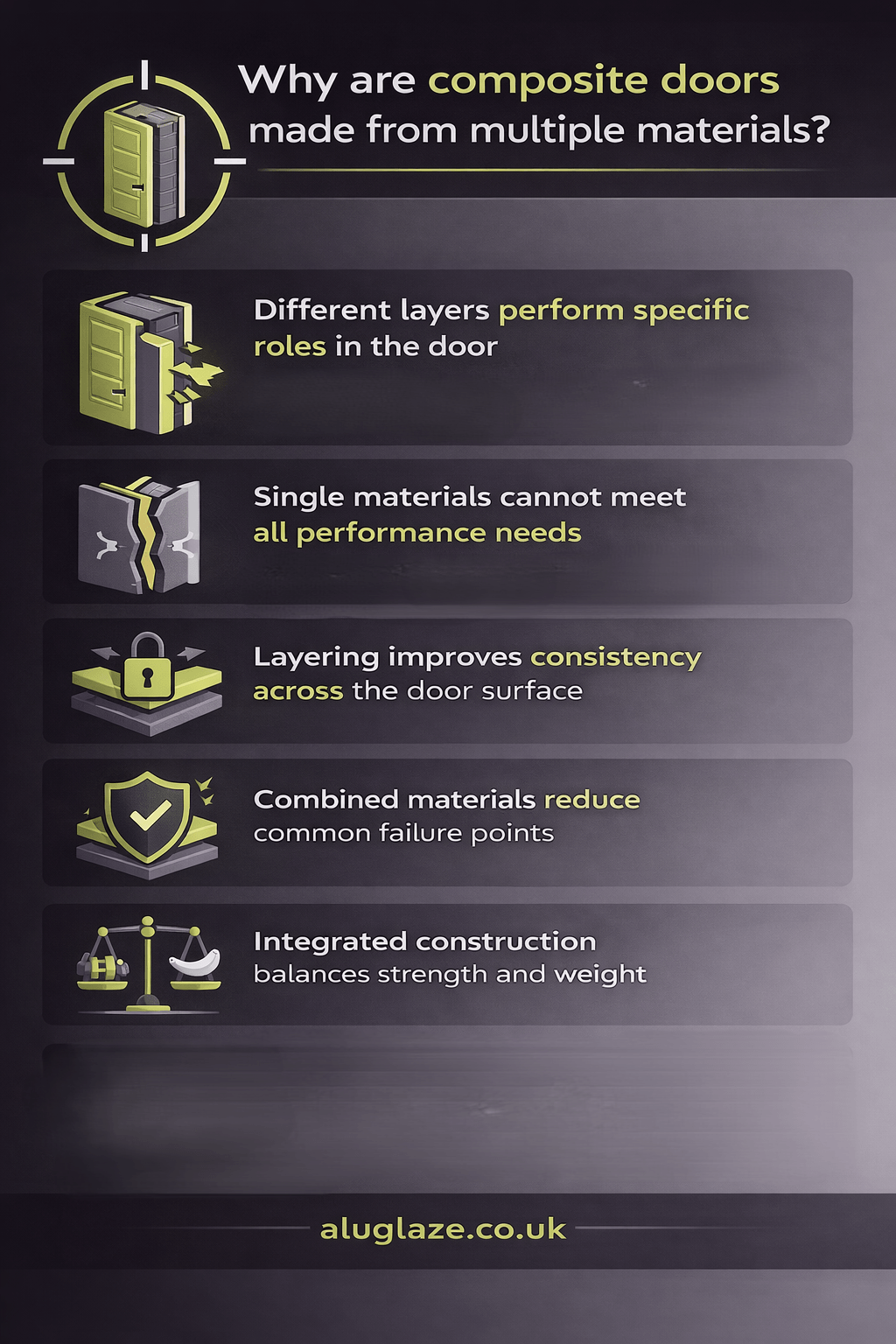
uPVC front doors typically cost £500 to £1,200 installed, while composite doors range from £1,000 to £2,500 depending on size, finish, and glazing. Installation costs vary with complexity and structural work.
Composite doors offer better long-term value due to a longer lifespan. uPVC provides limited colours and finishes, while composite offers wider design options, realistic wood effects, and greater flexibility for glazing and custom styles.
If you need budget-friendly, low-maintenance doors for secondary entrances or rental properties, our uPVC doors provide compliant solutions meeting building regulation minimums.
For premium front entrances prioritising security and kerb appeal, our composite doors deliver solid core construction with extensive design flexibility and superior long term performance.
Best Fit for Your Home: uPVC or Composite Doors
Property style, entrance location, and performance priorities determine which door type provides optimal value for specific applications and homeowner requirements.
Best Door for Modern Homes
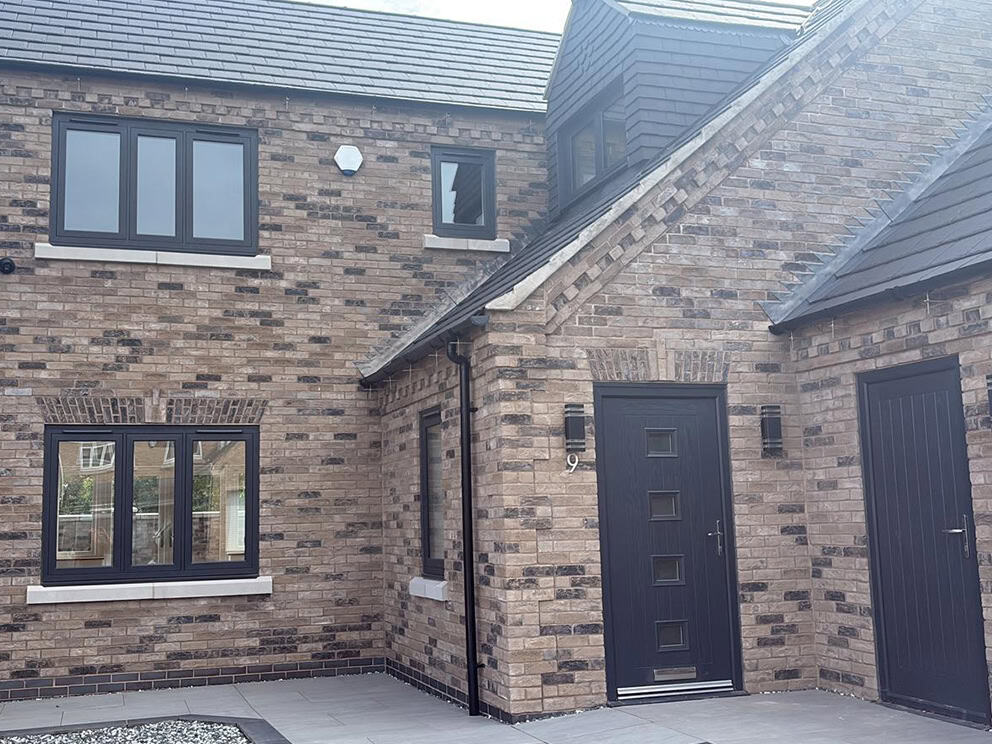
Modern homes suit composite doors with clean designs, bold colours like anthracite grey or black, and sleek slab styles. Their solid build meets higher security expectations while premium finishes enhance kerb appeal and overall property value.
Best Door for Period or Traditional Properties
Traditional properties benefit from composite doors that replicate timber through realistic grain patterns, panel detailing, and accurate colours. These finishes maintain period character without the upkeep of real wood. uPVC suits rental properties, secondary entrances, and budget replacements where function matters more than appearance.
Composite is the better choice for main front doors, exposed locations, higher security needs, and homes where kerb appeal and long term value are important considerations.
Conclusion
Composite doors offer the best overall solution for UK homeowners with stronger security, better insulation, and longer-lasting performance over 25 years. uPVC remains a practical choice for budget-focused replacements or secondary entrances. The right option depends on how important the entrance is, your security needs, and long-term value rather than upfront cost.
Get your free quote from us today, and our team will help you select the right front door for your property and requirements.
FAQs
Are composite doors better than uPVC doors?
Composite doors typically outperform uPVC doors in security, insulation, lifespan, and finish quality. However, uPVC doors still meet regulatory minimum standards at a lower cost.
Are composite doors worth the extra cost?
Yes, especially for front entrances where security and durability matter most. The higher upfront cost is often justified by a service life of around 25 to 35 years, compared with roughly 20 years for many uPVC doors.
Which doors are more energy efficient?
Composite doors usually achieve better thermal performance because of their solid foam cores. That said, quality uPVC doors can still meet the 1.4 W/m²K replacement standard when properly specified.
How long do composite and uPVC doors last?
Composite doors generally last 25 to 35 years in UK weather without structural issues. uPVC doors typically provide 20 to 30 years of service, depending on quality and exposure conditions.
Which doors require less maintenance?
Both composite and uPVC doors are low-maintenance options. They usually only need occasional cleaning, annual hardware lubrication, and periodic seal replacement. Neither requires painting or special treatments during its service life.
Sound good?
Get in touch on 0113 519 5507 to talk about your front door replacement.