- February 27, 2026
- Posted in Advice & News
Types of Windows Explained: Styles, Materials & Uses
Windows come in a range of opening styles, frame materials, and glazing options — each designed to suit different property types and performance needs. The right choice doesn’t just enhance appearance; it improves natural light, ventilation, energy efficiency, security, and overall comfort in your home or commercial space.
There is no single best window for every home, since the right choice depends on opening style, frame material, and overall performance. Opening style affects ventilation and cleaning access. Frame material influences insulation, durability, and appearance. Glazing determines energy efficiency, noise control, and security. This guide outlines styles, materials, and performance factors to help you choose the best option available.
Key Takeaways
- Window selection depends on three factors, including opening style, frame material, and glazing specification for energy and security.
- Frame materials like aluminium, uPVC, and timber each offer different thermal performance, maintenance requirements, and expected lifespans.
- Modern replacement windows typically target 1.2 to 1.6 watts per square metre kelvin to meet UK building regulations.
How Windows Are Categorised
Windows are classified in three main ways to help homeowners compare options properly.
The key factors that shape window selection are:
- Opening style affects how the window operates, influencing ventilation, cleaning access, and emergency escape.
- Frame material impacts thermal performance, maintenance requirements, and long-term appearance.
- Use case or property type determines which combinations suit period homes, modern builds, flats, or commercial spaces.
This classification system makes later comparisons simpler and ensures consistency when evaluating different window products.
Types of Windows by Opening Style
Different opening mechanisms suit different spaces and usage patterns, and the style you choose affects how much ventilation you get, how easy cleaning becomes, and whether the window meets specific building requirements.
Below are the main window styles used across UK properties and where each one works best.
Casement Windows
Casement windows are side-hinged and open inward or outward on vertical hinges.
They suit modern and period homes, offering strong ventilation from the full opening. Simple seals aid weather resistance, while outward-opening requires clearance and visible frame hardware.
Sliding Sash / Box Sash
Vertical sliding sash windows move up and down in channels, creating a classic period style common in Georgian and Victorian properties, especially conservation areas.
They preserve character and suit tall openings, but need more maintenance. It may require like-for-like replacement and often benefits from secondary glazing for efficiency.
Tilt & Turn
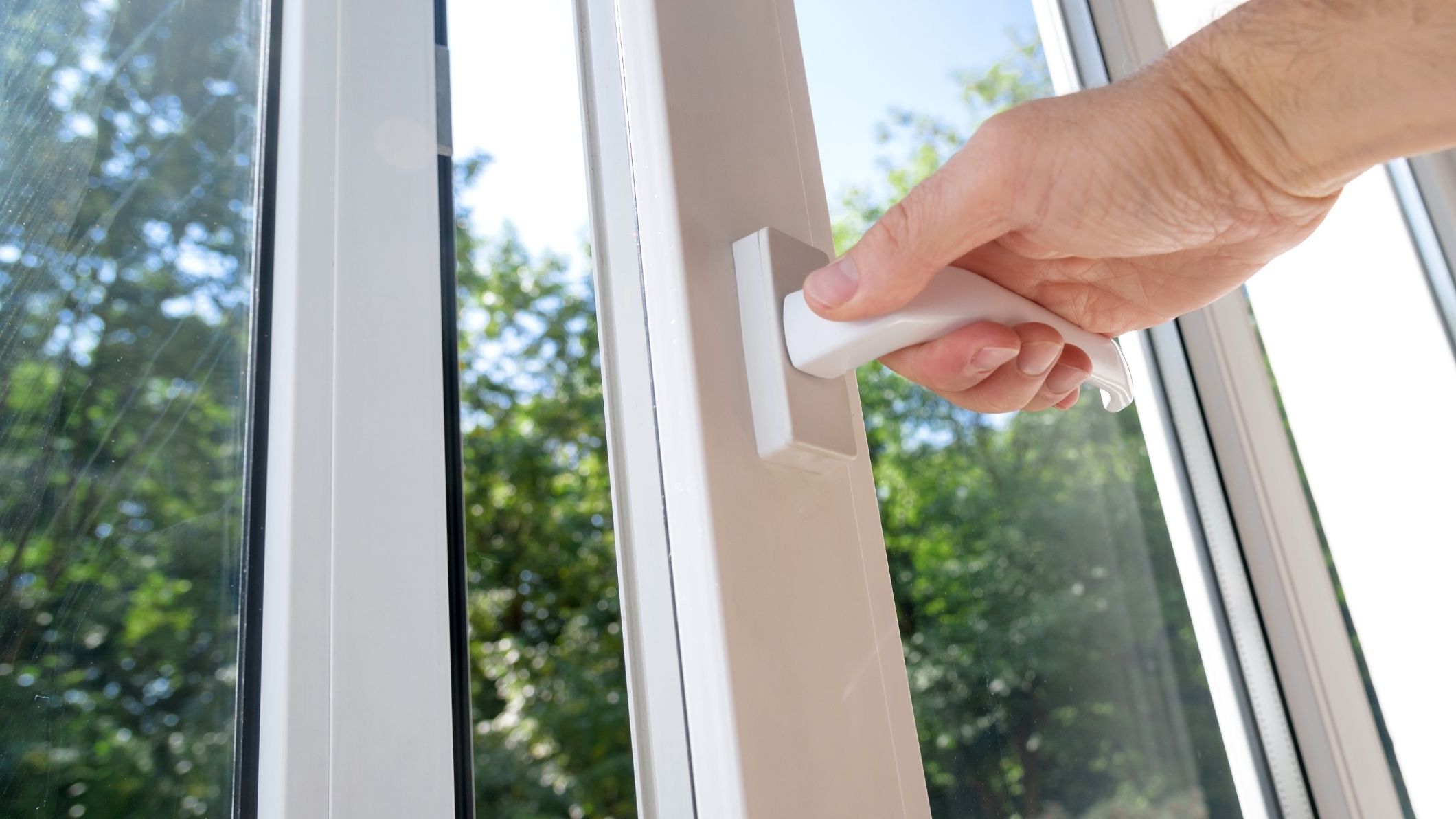
Tilt and turn windows open inward, tilting for ventilation or turning fully for cleaning which makes them ideal for apartments and upper floors.
They offer flexible airflow, easy indoor cleaning, and strong weather seals, but cost more than casements and may restrict furniture placement near openings.
Sliding (Horizontal)
Horizontal sliding windows move sideways in tracks, making them ideal for patios, balconies, and apartments with limited external space.
They save space and allow wide openings, but provide less ventilation since only half opens.
Fixed / Picture Windows
Non-opening fixed windows maximise daylight and views where other windows provide ventilation. They suit living rooms and stairwells, offer uninterrupted glass, lower cost for large glazed areas, and excellent insulation.
No ventilation limits where these can be used, and safety and egress considerations affect bedroom placements.
Awning & Hopper
Top-hinged awning windows open outward from the top, while bottom-hinged hopper windows open inward from the bottom.
Bathrooms, basements, and sheltered areas suit these compact windows, offering rainproof ventilation and secure airflow. But small openings limit them to secondary, not primary, ventilation.
Bay & Bow Windows
Bay and bow windows project outward in angled or curved groups, expanding floor area and daylight in living rooms.
They enhance appearance and form alcoves, but multi-panel construction and custom sizing raise costs and risk.
Pivot Windows & Rooflights
Pivot windows rotate on central axes for large openings and architectural effect, while rooflights need U-value performance, watertightness, and compliant sloping installation.
Replacement windows fitted must include trickle vents for ventilation.
Types of Windows by Frame Material
Frame material affects insulation, durability, maintenance, and appearance because different materials conduct heat differently and age in different ways.
Below are the most common window frame materials and how each performs in real homes.
Aluminium
Aluminium windows offer slim sightlines and high strength, ideal for large glazed openings and modern designs, maximising glass area. Thermal breaks improve insulation, with well-specified systems achieving about 1.2 to 1.6 W/m²K using quality glazing.
Powder-coated or anodised finishes need minimal maintenance, and their lifespan often exceeds 30 years.
uPVC
Cost-effective uPVC is widely used for UK residential replacement windows because multi-chamber profiles reduce heat loss.
These frames commonly achieve whole-window U-values around 1.2 to 1.6 W/m²K with modern glazing, while very low maintenance needs only occasional cleaning without repainting.
Typical lifespan reaches 20 to 30 years. Our uPVC windows provide reliable domestic replacement performance.
Timber
Traditional timber frames suit heritage or period properties especially well because the naturally insulating material provides good thermal performance when combined with modern glazing.
Regular maintenance, such as repainting or sealing every few years, prevents weather damage, and the lifespan can reach 25 to 60 years or more with proper care and protection from moisture.
Composite or Hybrid
Composite or hybrid frames pair timber inner structures with protective aluminium or uPVC cladding, balancing strong insulation and lower maintenance than solid timber.
They typically meet modern efficiency targets comparable to high-performance systems, while outer cladding shields the core and extends lifespan.
Modern high-performance glazing units used in these frames can achieve centre-pane U-values near 0.45 W/m²K in trials.
Steel or Slimline
Steel or slimline frames offer extremely narrow sightlines for architectural, industrial, or heritage glazing where minimal visibility matters. Because steel conducts heat, modern systems use thermal breaks or high-performance glazing.
Frames are durable and long-lasting when protected against corrosion, though maintenance may include repainting over time. Their lifespan can exceed 30 years with proper protection from moisture and rust.
Window Glazing Types for Different Performance Needs
Glazing choice affects every window type regardless of frame material or opening style, so you should always match glass specification to use case for best results across energy, noise, safety, and solar control requirements.
Key glazing types (each solving different problems) include.
- Double or triple glazing provides different insulation levels, with triple better for extreme cold.
- Low-E coatings and argon gas fills reduce heat transfer and improve overall efficiency.
- Laminated or toughened glass improves safety and security where impact or forced entry risks exist.
- Acoustic glazing with laminated units and wider air gaps reduces noise near busy roads.
- Solar-control glazing and suitable g-values help prevent overheating in highly sun-exposed glazed areas.
The right glazing specification depends on balancing insulation, safety, noise control, and solar gain.
Window Choices by Property Type
Different property types benefit from specific window combinations based on architectural style, planning constraints, and performance priorities.
The following breakdown shows typical requirements for common UK building types.
Terraced Houses
Front elevations often face conservation restrictions limiting replacements, while side and rear windows allow more flexibility. Period terraces require sympathetic designs preserving character, whereas modern terraces typically accommodate contemporary window styles.
Semi Detached Homes
Shared party walls restrict side windows facing neighbours, while front and rear elevations usually permit standard replacements.
Energy efficiency matters where single glazing remains, and planning permission seldom applies outside conservation areas.
Detached Properties
Detached homes allow flexible window styles across elevations to suit rooms. Large glazed areas become possible without overlooking concerns, and energy performance affects whole-house bills significantly. Security features matter more in isolated locations away from neighbouring properties.
Flats & Apartments
Building management approval is often required before making changes to external appearance in shared buildings.
Fire safety and means of escape rules affect bedroom windows, and inward-opening styles help where external access is difficult for cleaning. Acoustic performance matters in urban locations where traffic and neighbour noise affect living comfort.
Period & Listed Buildings
Like-for-like replacement is often required to preserve historic character and meet conservation rules. Secondary glazing improves thermal performance while keeping original frames. Conservation officers assess proposals against heritage impact before granting consent.
Modern & New Build Homes
Contemporary styles and large glazing areas are common in new developments, where regulations set minimum performance standards.
Extensive south-facing glass increases overheating risk, and ventilation requirements apply from initial installation.
Commercial Buildings
Curtain walling suits office and retail façades needing large uninterrupted glazing and a modern appearance. Fire safety and escape rules guide specifications.
Maintenance access planning affects long-term costs when windows cannot be reached from ground level.
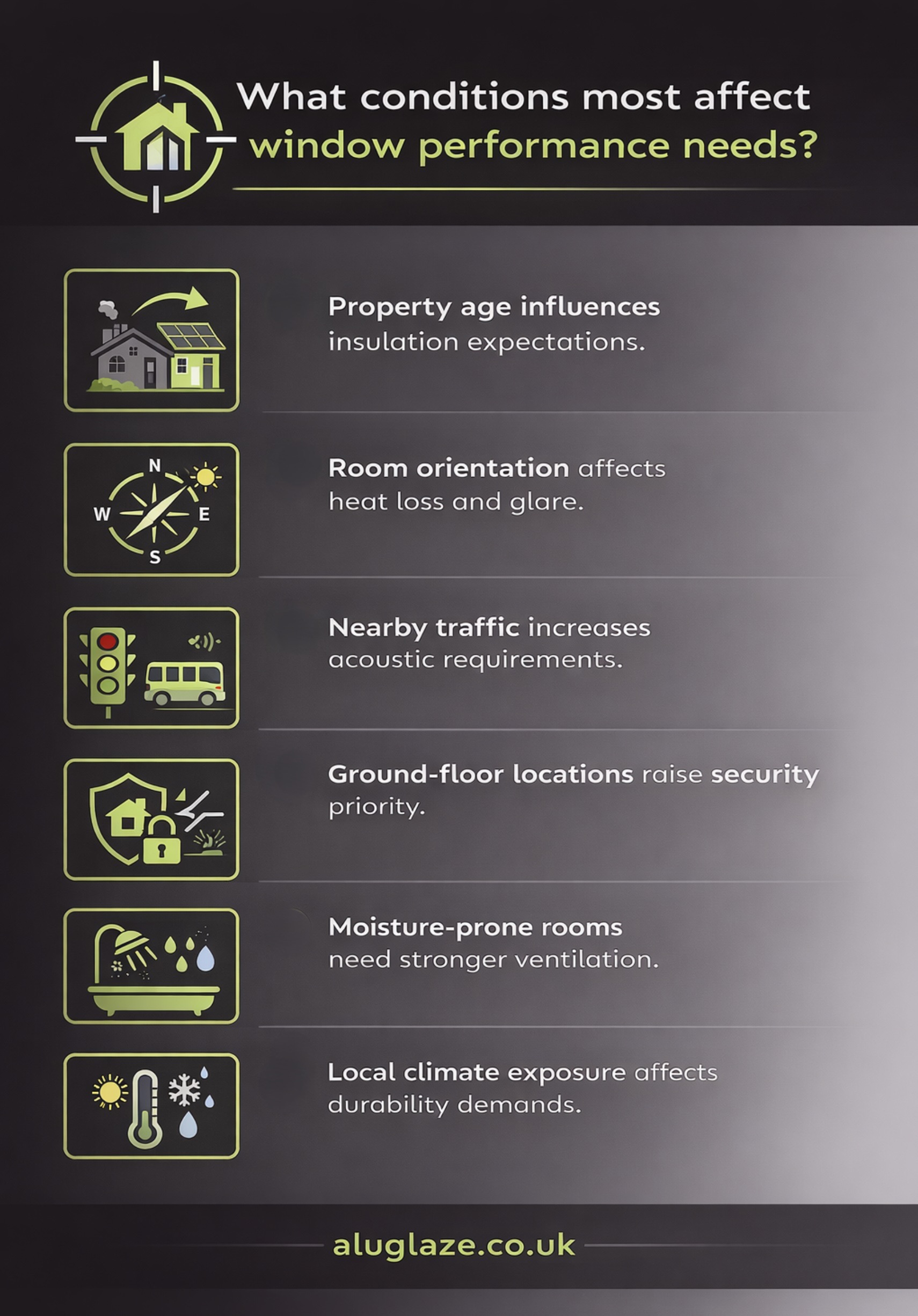
What Affects Window Performance
Multiple factors determine how windows perform and what they cost to buy and install, and understanding these helps set realistic budgets and performance expectations.
Energy Efficiency and U Values
Lower U-values indicate better insulation and reduced heat loss, improving comfort and heating costs. Modern replacement windows typically target 1.2 to 1.6 W/m²K to meet compliance benchmarks set in building regulations.
U values are calculated using recognised standards that account for frame, edge seal, and centre pane performance together as a complete assembly.
Noise Reduction Performance
Glass thickness, laminated panes, and wider air gaps improve acoustic insulation when specified correctly. Homes near busy roads or railways may need upgraded glazing, costing more.
Performance improves when inner and outer panes use different thicknesses to disrupt sound transmission frequencies.
Security Features and Locking Systems
Laminated safety glass resists impact and forced entry better than standard glass, while multi-point locking systems improve protection and insurance compliance for vulnerable ground-floor windows.
Higher security specifications typically increase upfront cost but improve safety and may reduce insurance premiums over time.
Ventilation and Condensation Control
Proper airflow reduces condensation and mould risk in moisture-prone rooms like kitchens and bathrooms.
Replacement windows may require trickle vents under regulations, slightly increasing cost but improving indoor comfort and air quality.
Key Factors That Determine Window Cost
Window size and quantity raise material and labour costs. Frame material, glazing specification, and complex designs affect pricing, while difficult access, scaffolding, or structural alterations can significantly increase installation expenses.
The table below shows how different window types compare across key selection factors for UK homes:
| Window Type | Best Use Case | Typical U-Value Range | Maintenance Level | Relative Cost |
|---|---|---|---|---|
| Casement (uPVC) | General residential | 1.2 to 1.6 W/m²·K | Very low | Budget friendly |
| Casement (aluminium) | Modern / commercial | 1.2 to 1.6 W/m²·K | Very low | Mid to high |
| Sliding sash (timber) | Period properties | 1.4 to 2.0 W/m²·K | Moderate to high | High |
| Tilt & Turn | Apartments / upper floors | 1.2 to 1.6 W/m²·K | Low | Mid range |
| Fixed / picture | Large openings / views | 0.8 to 1.4 W/m²·K | Very low | Low to mid |
Each window type delivers different benefits depending on property age, location, and performance priorities, so matching the right combination to your specific situation avoids overspending on unnecessary features or underperforming where it matters.
Window Installation and Compliance Requirements
Replacement windows and new-build installations face different regulatory requirements in the UK that affect specification and installation processes.
Key compliance requirements include:
- New-build windows must meet limiting U-values around 1.6 W/m²K under current building regulations.
- Replacement windows in existing homes follow separate guidance but typically target similar performance levels.
- Building regulations Part L sets energy thresholds and calculation methods that installers and designers must follow.
- Safety glazing becomes mandatory in doors, low-level windows, and areas near stairs.
- Planning permission may be required in listed buildings or conservation areas before changing the external appearance.
Meeting these requirements helps ensure installations remain compliant, safe, and energy-efficient.
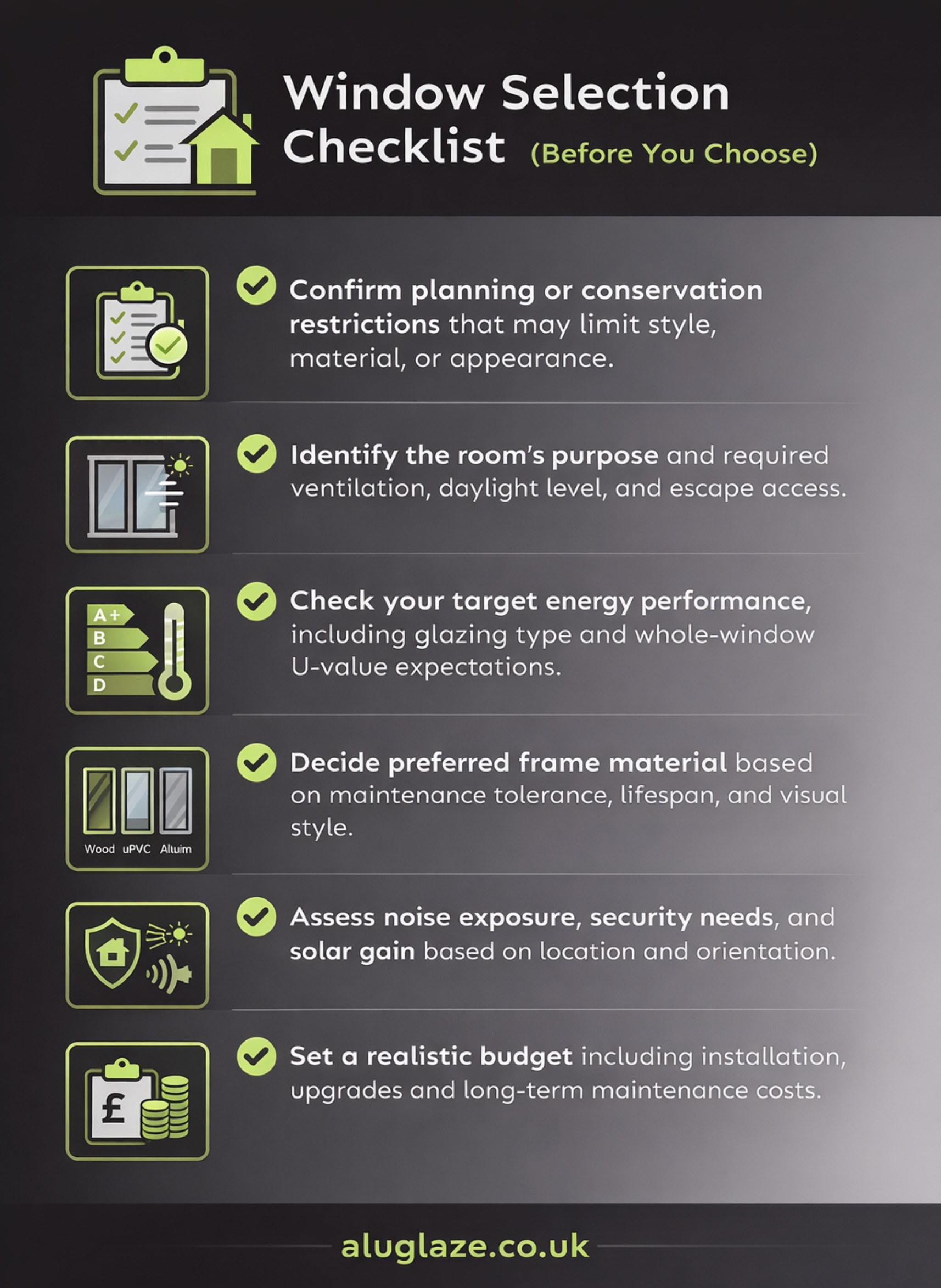
How to Choose the Right Window Type
Conclusion
The right window matches style, material, and performance to your home’s needs and budget, affecting ventilation, maintenance, efficiency, comfort, and energy costs.
If you want personalised advice on which window types suit your property best, request a free survey and quote, and we will help you with the best options for your situation.
FAQs
What is the most energy-efficient window type?
Triple-glazed windows in thermally broken frames achieve the lowest U-values, typically 0.8 W/m²K or better, though high-performance double glazing often provides similar whole-life value at lower cost.
Are aluminium windows better than uPVC?
Aluminium offers slimmer sightlines and longer lifespan but costs more upfront, while uPVC provides good performance at lower cost. Both meet modern efficiency standards when properly specified with quality glazing.
Which windows need the least maintenance?
Aluminium and uPVC need minimal maintenance beyond occasional cleaning, while timber requires repainting every few years. Composite reduces timber maintenance requirements while keeping the traditional appearance.
Do I need planning permission to change windows?
Usually not for like-for-like replacement in standard homes, but listed buildings and conservation areas require consent before making changes. Check with your local planning authority before starting work.
How long do modern windows last?
Aluminium lasts 30 plus years with minimal degradation, uPVC reaches 20 to 30 years depending on quality, and timber achieves 25 to 60 years with proper maintenance and protection from weather exposure.
Sound good?
Get in touch on 0113 519 5507 to talk about your front door replacement.